WALMART
Atlas Supply Chain
Harmonizing a Byzantine
Ecosystem at Scale.
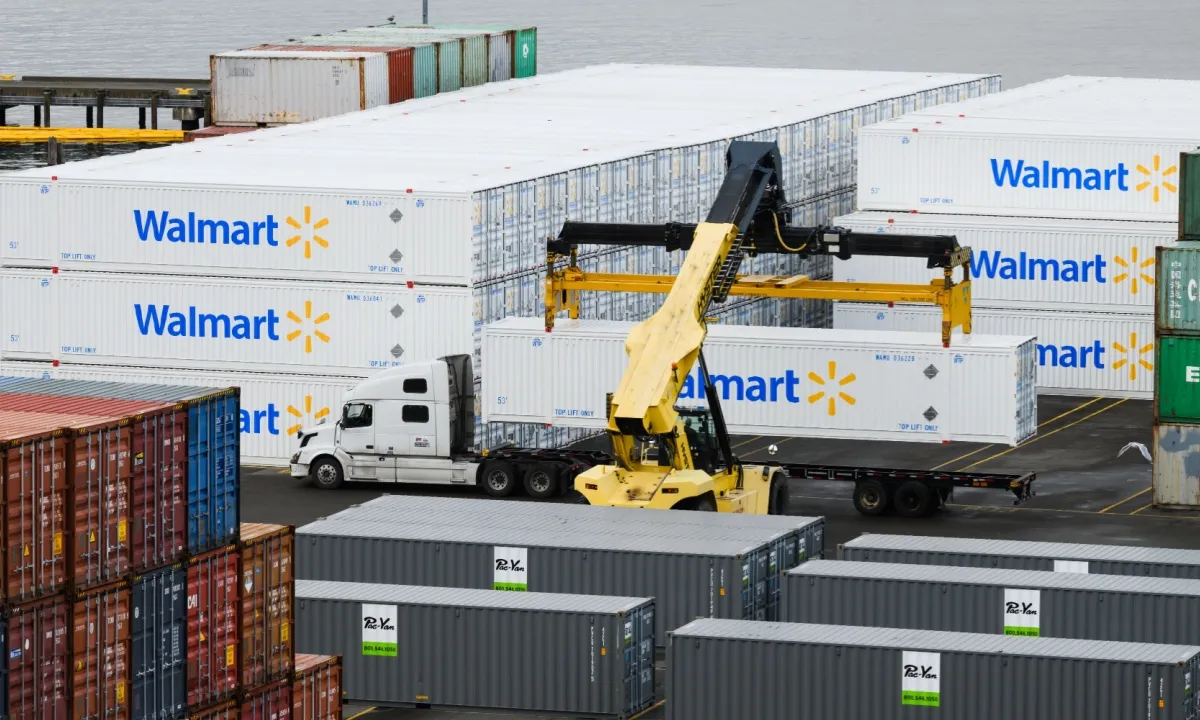
Global warehouses powered
2M
Lines of code orchestrated
Spin off BUs sparked through POC innovation
The Trojan Horse Challenge
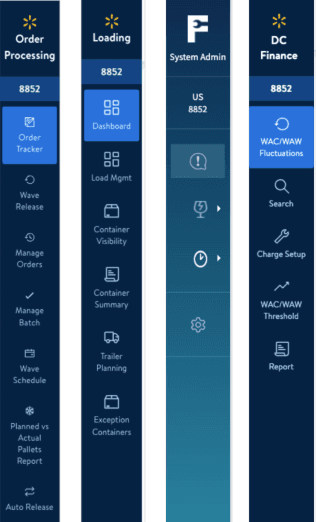
The initial request was simple: "Add a notification icon to the left nav." As a UX lead, I recognized this as a risk. Adding features to a navigation system that lacked a mental model wasn't a solution; it was clutter. The existing UI was a patchwork of separate team efforts, creating a steep learning curve and cognitive friction for associates trying to complete high-stakes tasks.
The Outcome: Engineering a Universal Framework
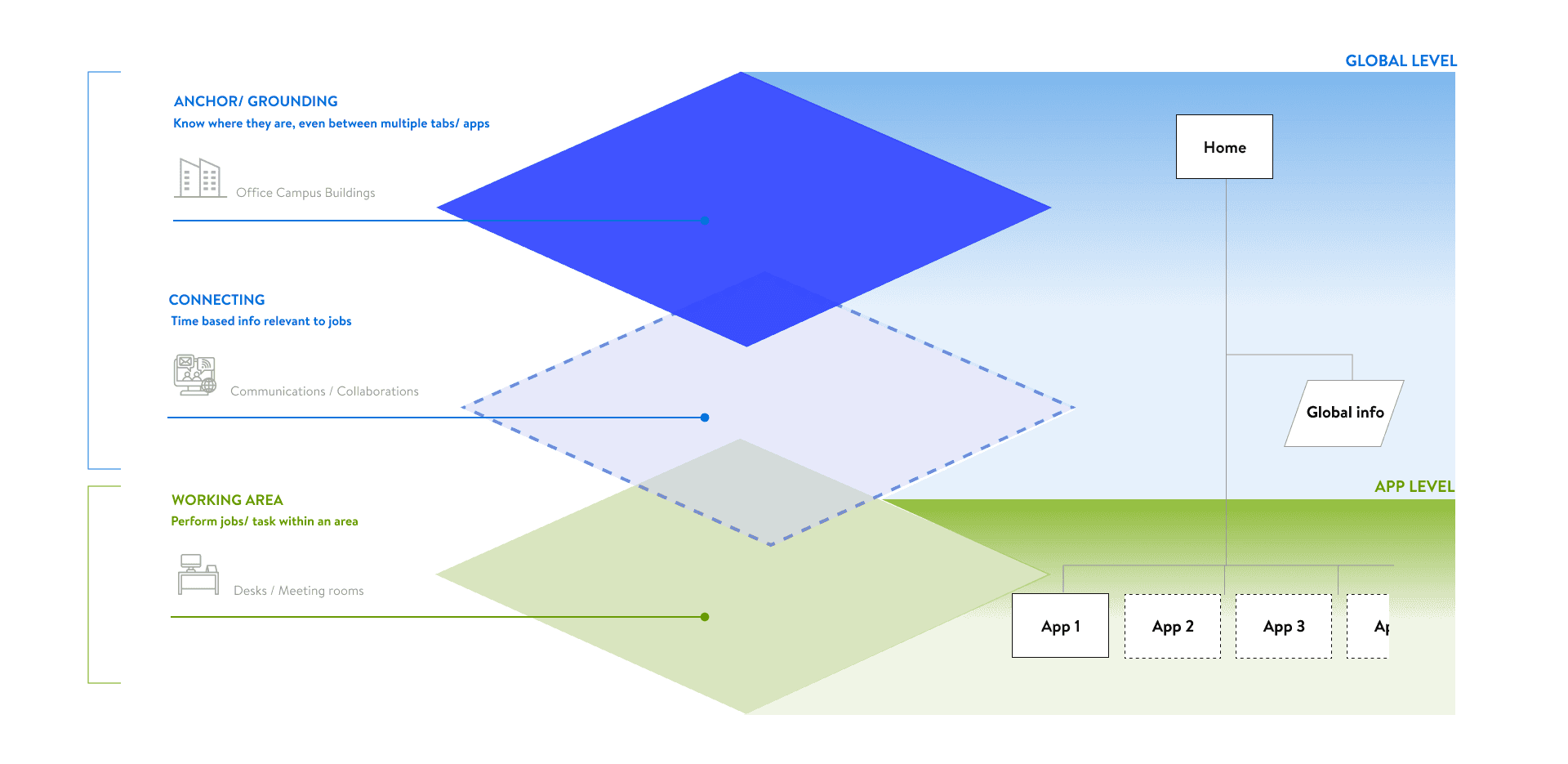
I advocated for a scope expansion to move beyond "adding an icon" toward architecting a Navigation Framework.
Logical Hierarchy: I reorganized the universal left and top navigation to follow a consistent mental model, ensuring that 12,000+ configurations felt like a single, unified tool.
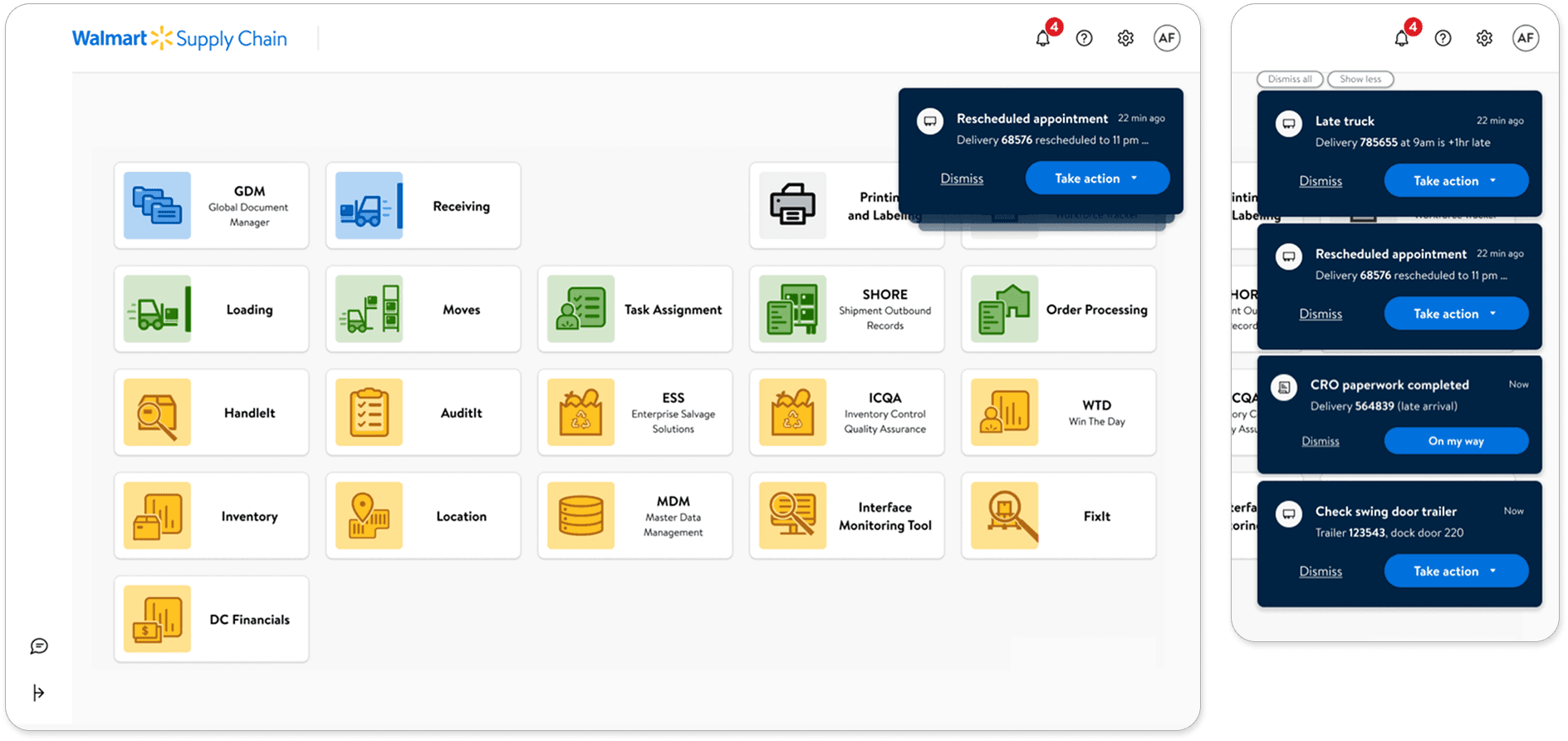
The Notification Engine: Instead of a passive icon that required proactive clicking, I designed an "Always-On" top layer. This allowed critical alerts to surface regardless of the user's current task, ensuring timely intervention without losing context.
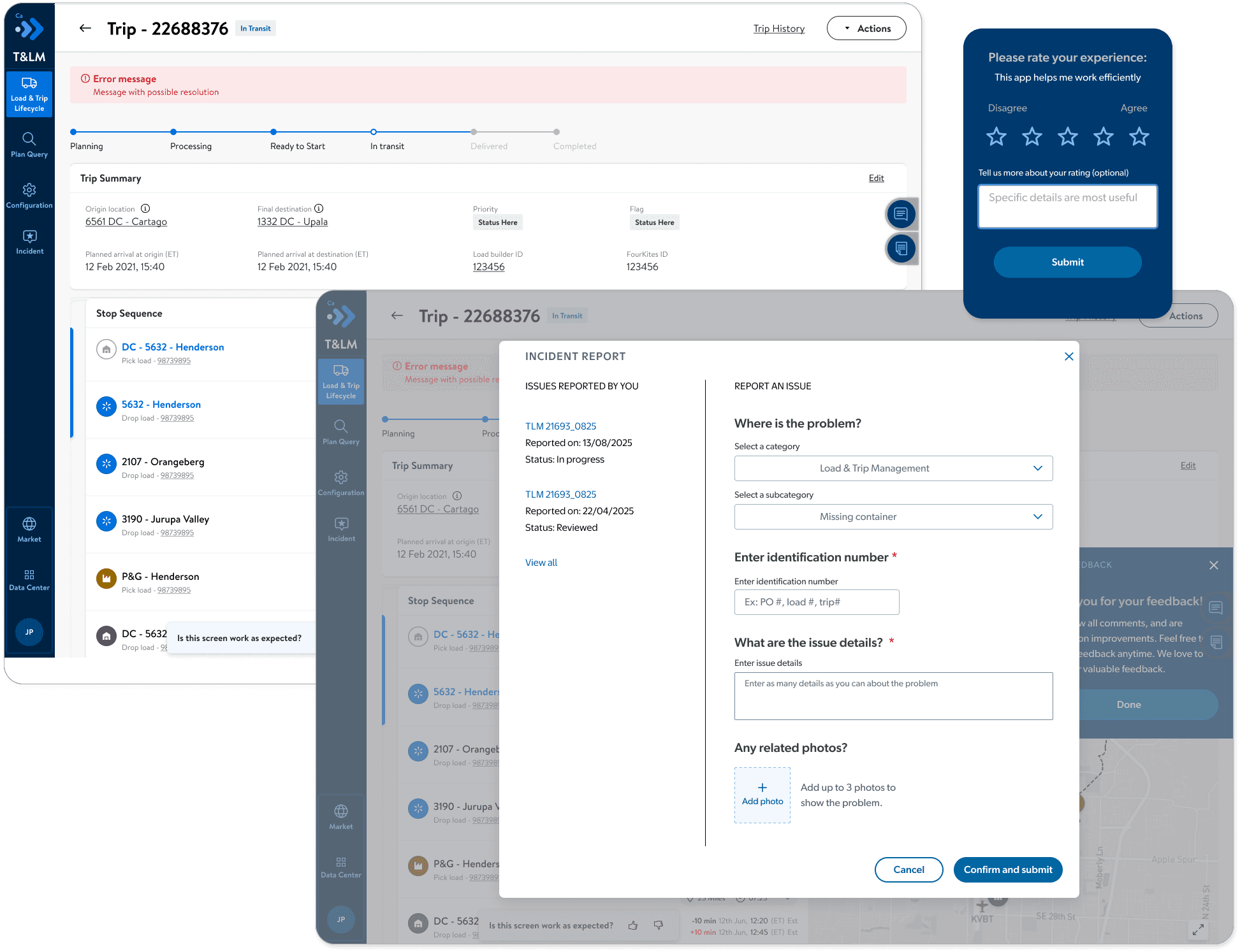
Universal Incident Reporting: I designed a scalable "Report an Issue" system integrated across Atlas and its 70+ connected apps. By automatically attaching metadata (current screen, active task, system state), I transformed a manual support process into a data-rich feedback loop for engineers.
Atlas is the backbone of Walmart’s global operations, a behemoth evolved over 10+ years by 500+ engineers across Sam’s Club, International, and the US. With 70+ microservices and 2M+ lines of code, it is the most complex product in all of Walmart products. However, a decade of decentralized development led to a byzantine architecture. I was brought in to solve a UI problem, but I stayed to fix the foundational logic.
The Problem vs Solution
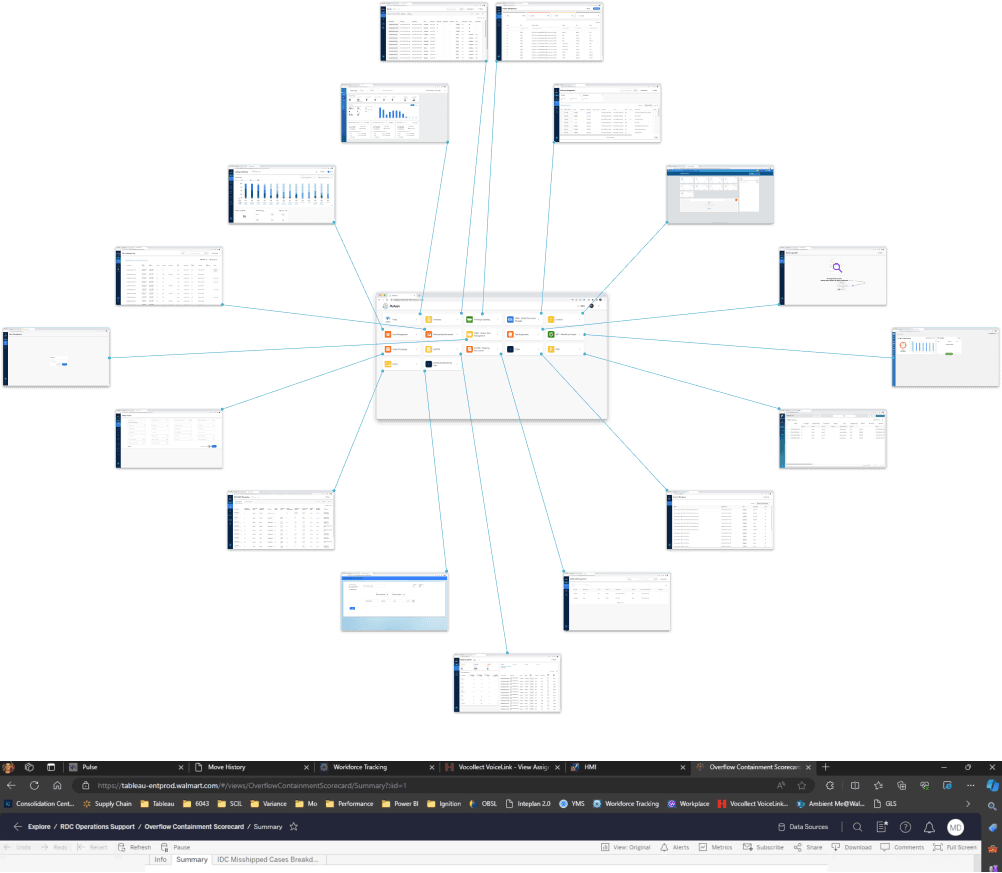
The Evolution of Order The Problem: A decade of "patchwork" updates created a byzantine navigation system that forced associates to relearn the UI for every task. The Solution: I engineered a unified navigation and notification layer that follows a singular logic. This framework doesn't just look better; it provides a high-fidelity foundation that ensures 2 million lines of code feel like a single, cohesive tool.
The labyrinth
The Foundation Layer Framework
Notification Snack Bar: Collapse & Expand
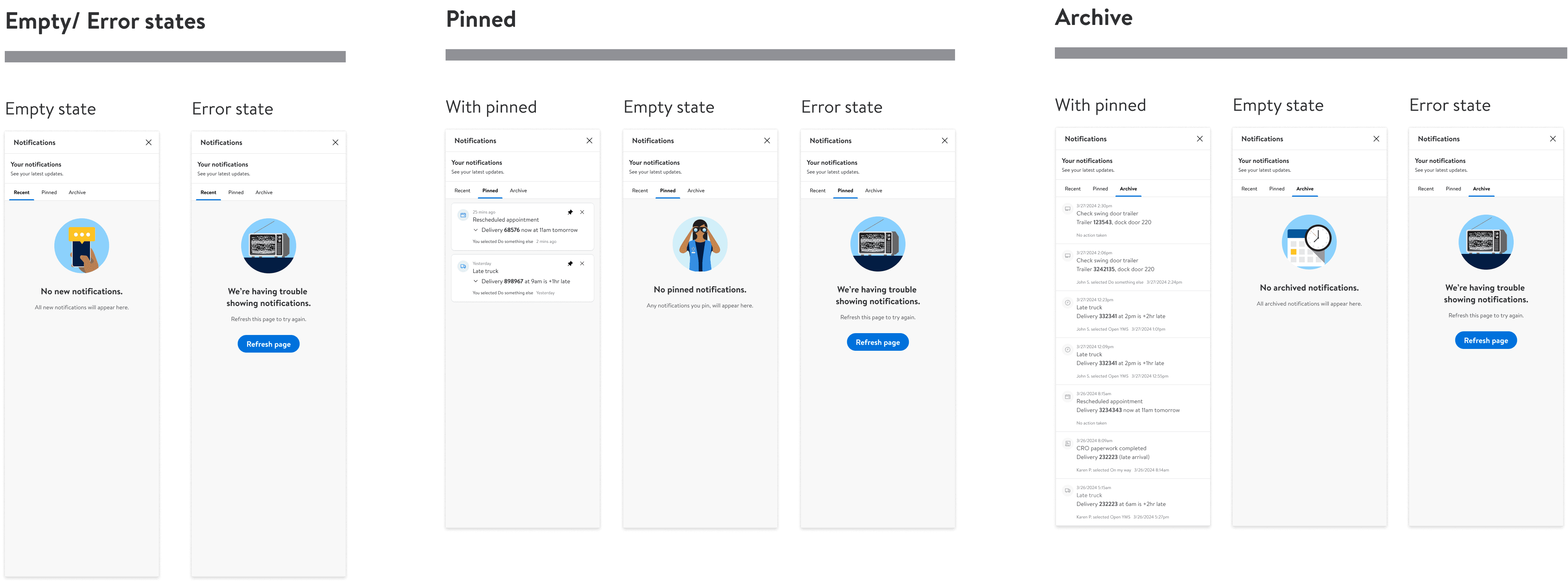
Notification Panel: Various States
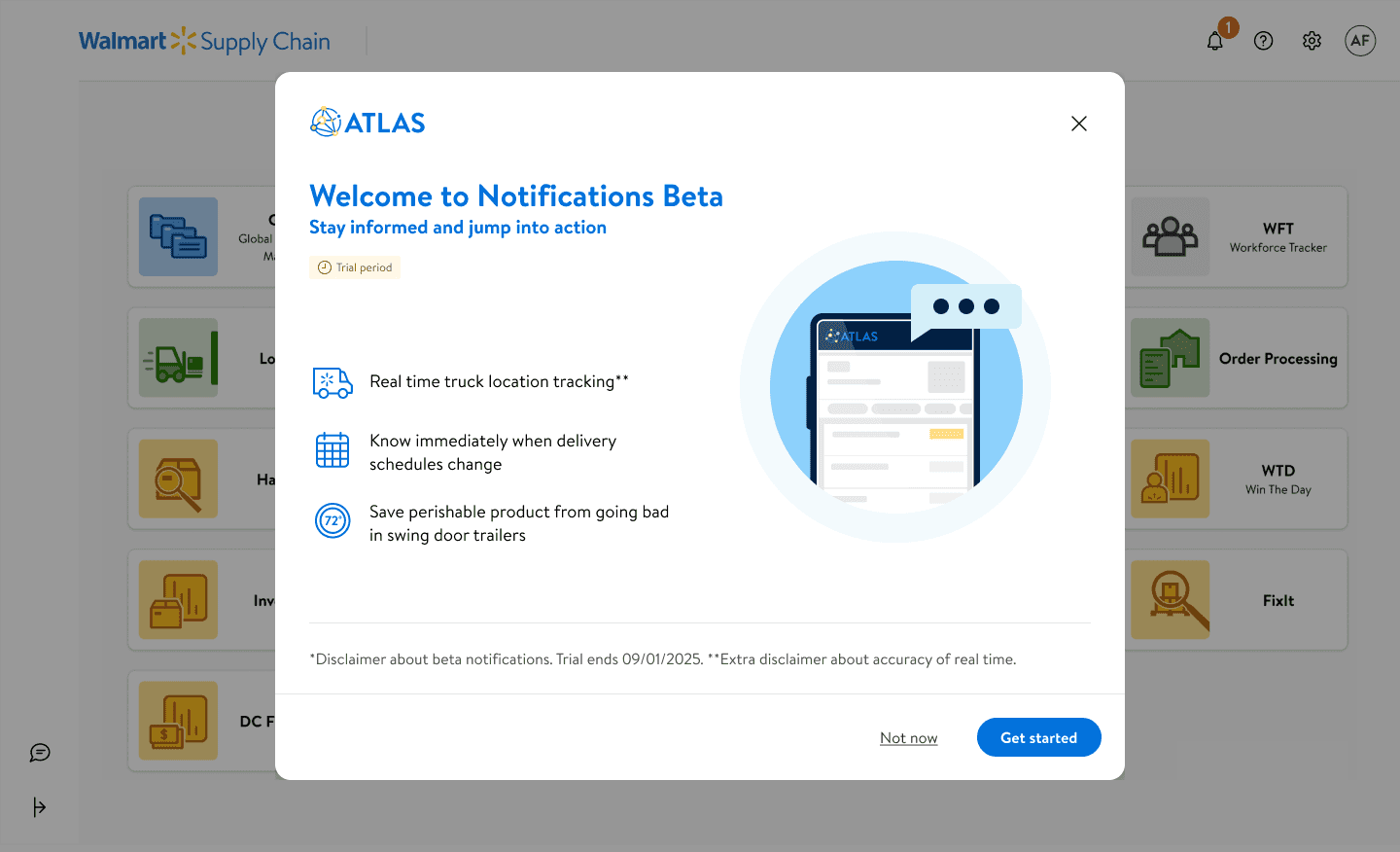
Notification Panel: FTU - Value Props
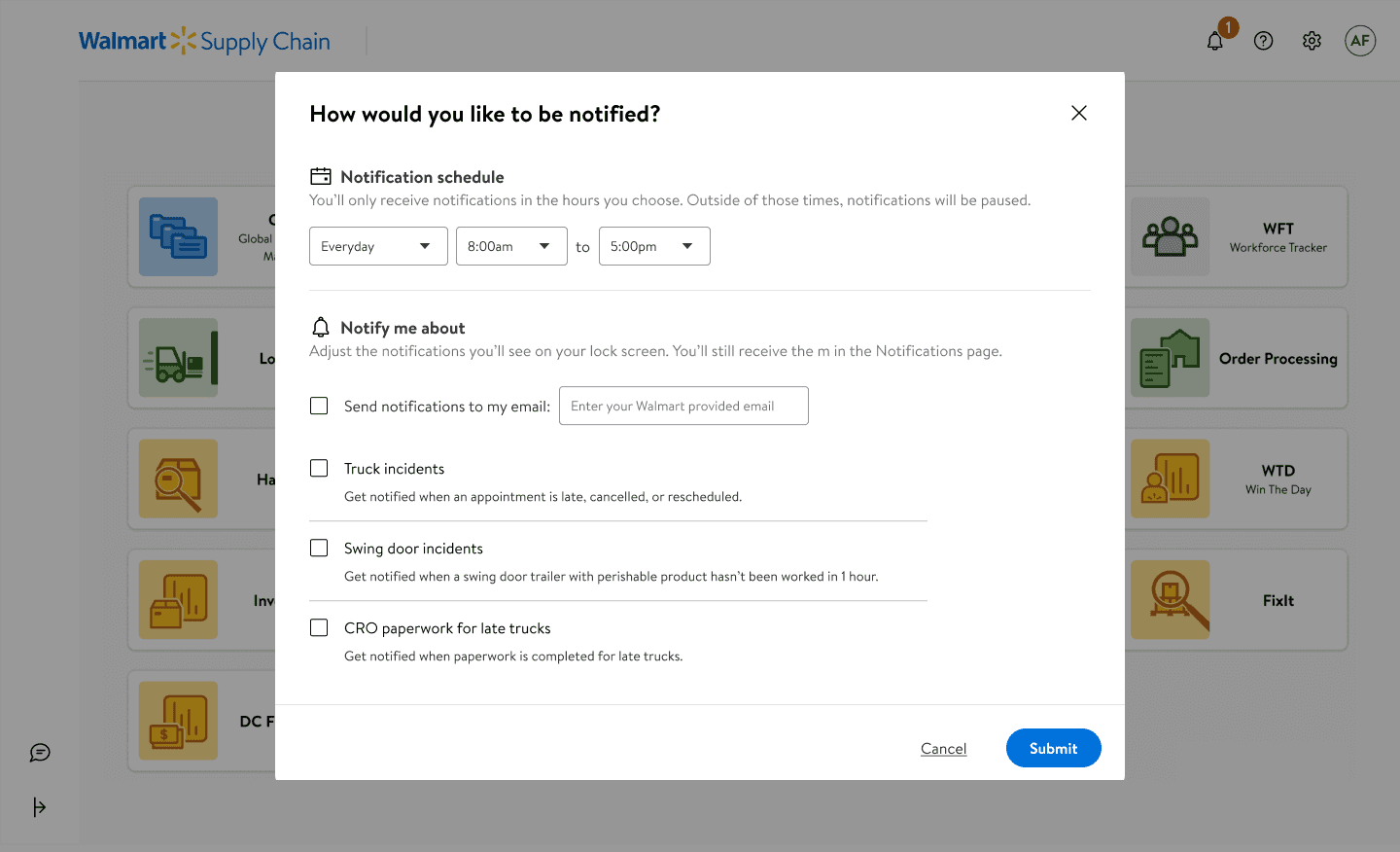
Notification Panel: FTU 2 - Data Collection
Universal Feedback & Incident Report
The Impact:
Balancing human needs with business anchors.
Structural Scalability:
By replacing random UI additions with a rigorous framework, I provided a "North Star" for 500+ engineers, ending the cycle of byzantine growth and ensuring Atlas can scale for another decade.
Reduced Cognitive Load:
Standardized navigation reduced the "search time" for tasks. Associates no longer have to learn 70 different UIs; they learn one system that works consistently across every microservice.
High-Fidelity Intelligence:
The universal incident reporter turned every associate into a "sensor," providing engineers with the precise metadata needed to resolve bugs faster, directly impacting the ROI of support operations.
The ROI of expanding the scope was clear: We traded a temporary "patch" for a permanent foundation. In a system with 2 million lines of code, the most valuable design choice isn't what you add—it’s the order you bring to the chaos.