AMAZON
Fresh Food Fast
Transforming the Grocery ‘To-Do’ into a ‘Want-To-Do.
Retention Gap
75%
Churn rate
One-time shopper
Loss Per Order
$16
Average financial loss per delivery order.
Schedule Friction
39%
Cancellations due to rigid delivery windows
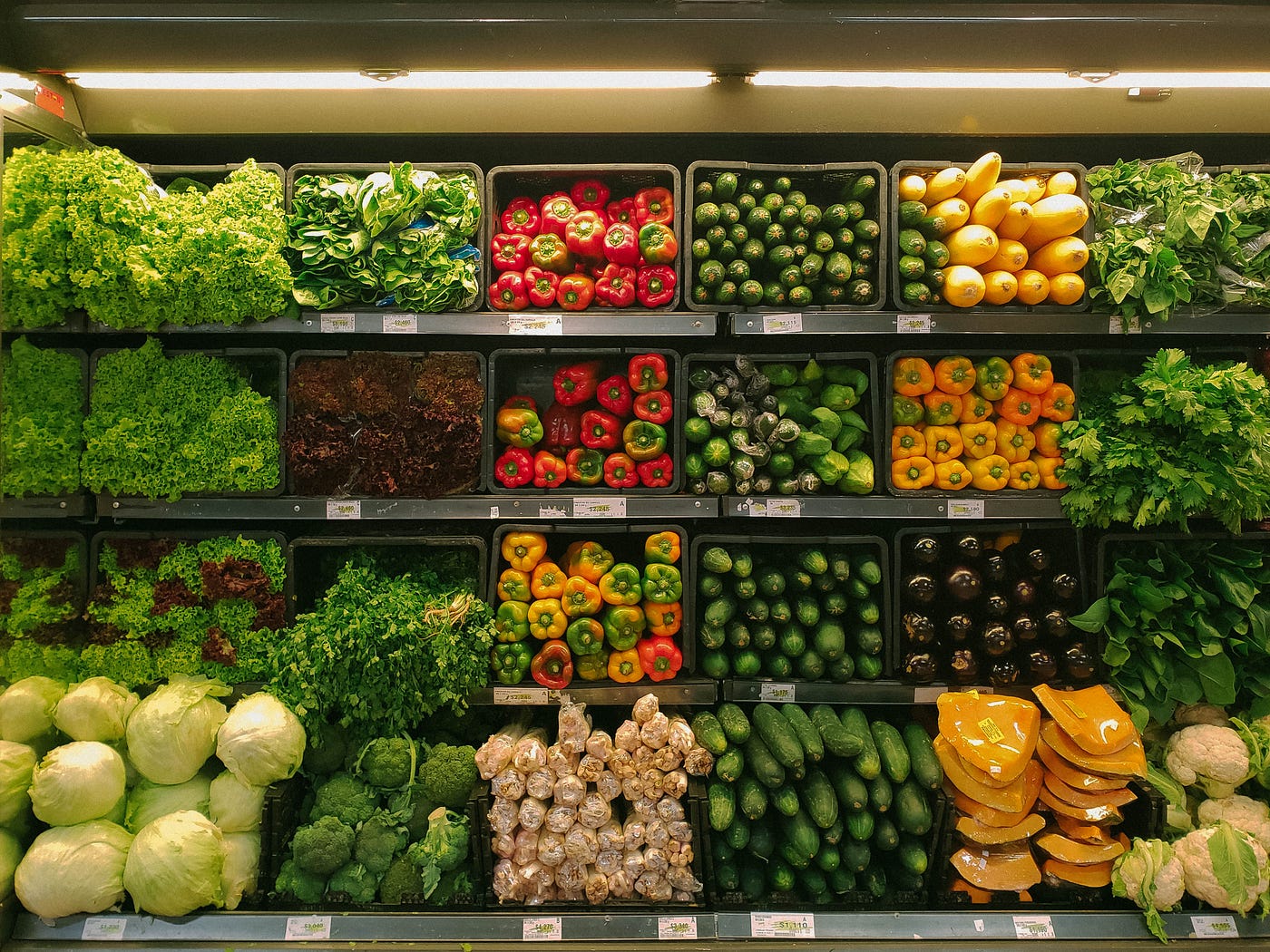
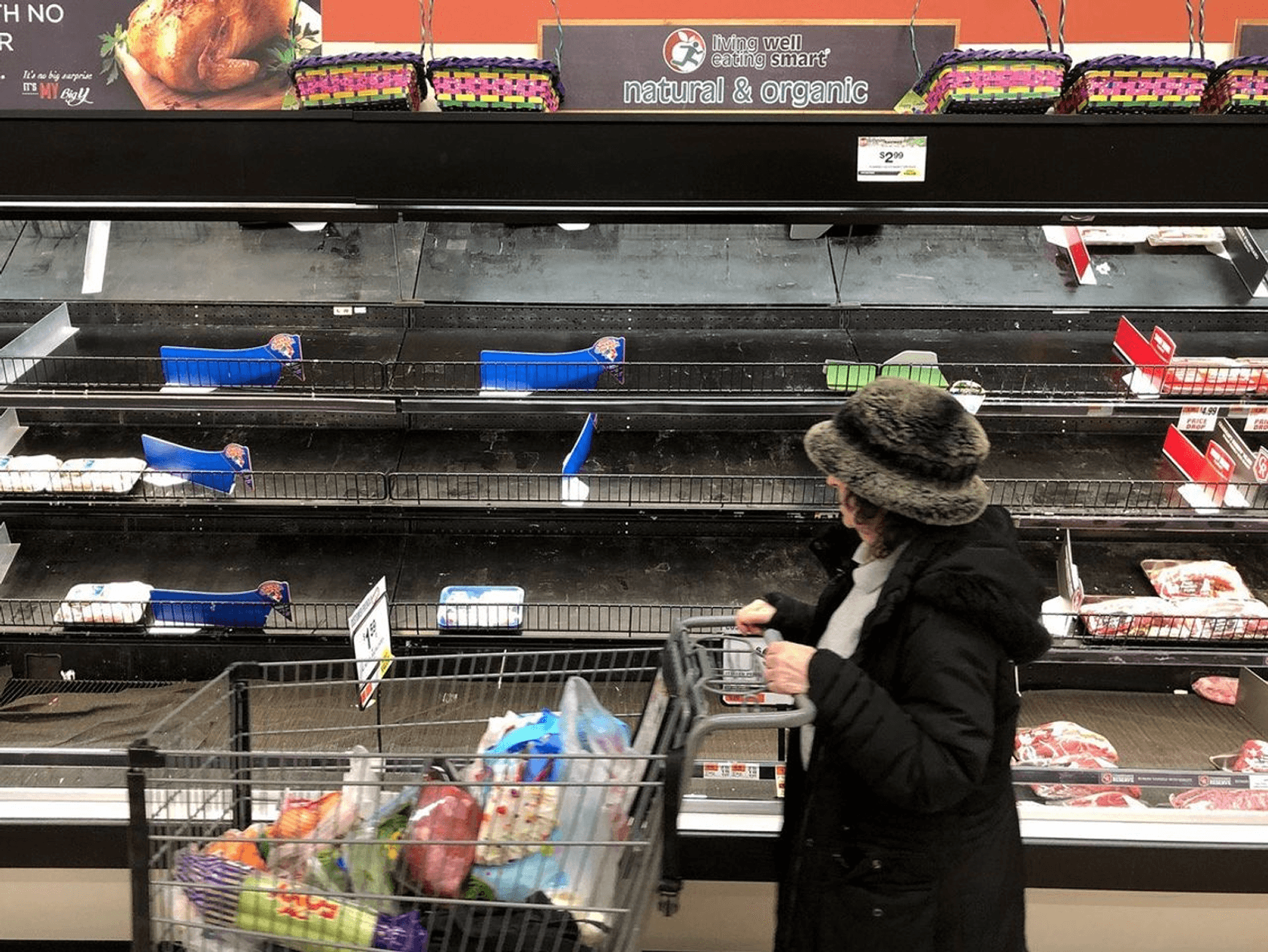
In March 2020, as the world transitioned to shelter-in-place, online grocery sales surged by 103%. Amazon was at the epicenter of this shift, yet we faced a critical paradox: while volume was at an all-time high, retention was a leaky bucket. 75% of customers shopped once or twice and never returned, leaving $2.6B on the table annually.
I led the conceptual and design thinking for a three-person innovation strike team (Strategy, Visual, and Design Leadership). Our goal was to move the needle from functional search to intuitive partnership, turning a weekly chore into a curated, personalized experience.
The Challenge
Through generative research, we identified that customers weren't just struggling with delivery windows (though 39% of cancellations were due to scheduling friction); they were struggling with decision fatigue.
The Trust Barrier: 28% of items were marked "do not substitute" because customers didn't trust Amazon to understand their dietary needs.
The Inspiration Gap: 15.3% of customers couldn't find trust-building info; they knew what they wanted to eat but couldn't bridge the gap to how to buy it.
The High-Stakes Friction: We were losing $8–$16 per delivery order. To become profitable, we had to move from one-off orders to "Essential Habits."
The Discovery:
Data-driven insights into why shoppers abandon the cart
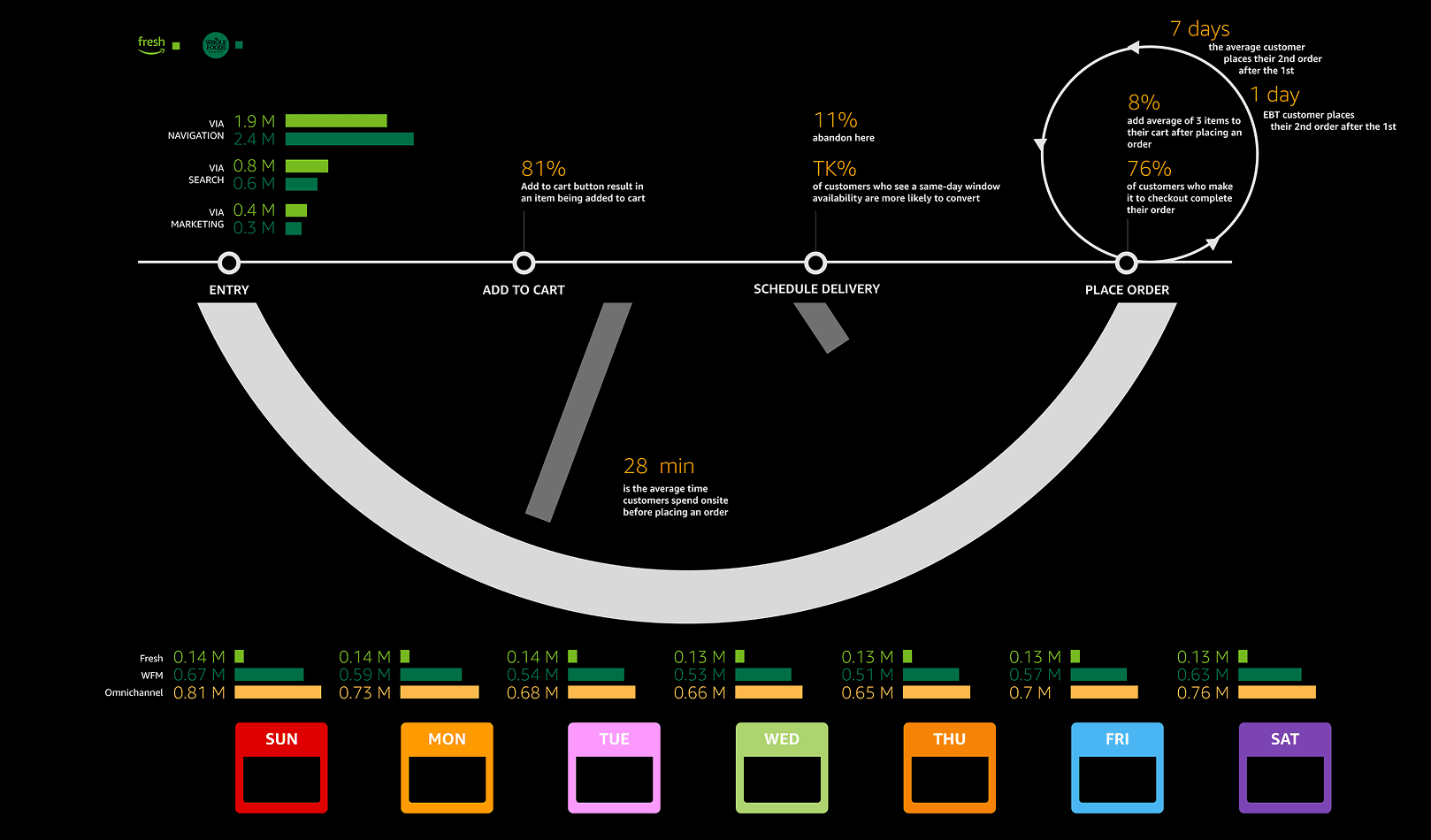
I synthesized complex shopping and checkout analytics into the journey map below to visualize the leaky bucket in our funnel. This data-driven map served as our strategic North Star, ensuring the team focused on the high-impact moments that mattered most to the customer and the business.
Our research deep-dive into the discovery phase revealed a startling inefficiency: 80% of intended items were going unfound due to cognitive load and decision fatigue. The average 46-minute grocery trip was plagued by a discovery gap. Shoppers didn't just need a faster checkout; they needed a curator.
The Strategy:
Moments That Matter
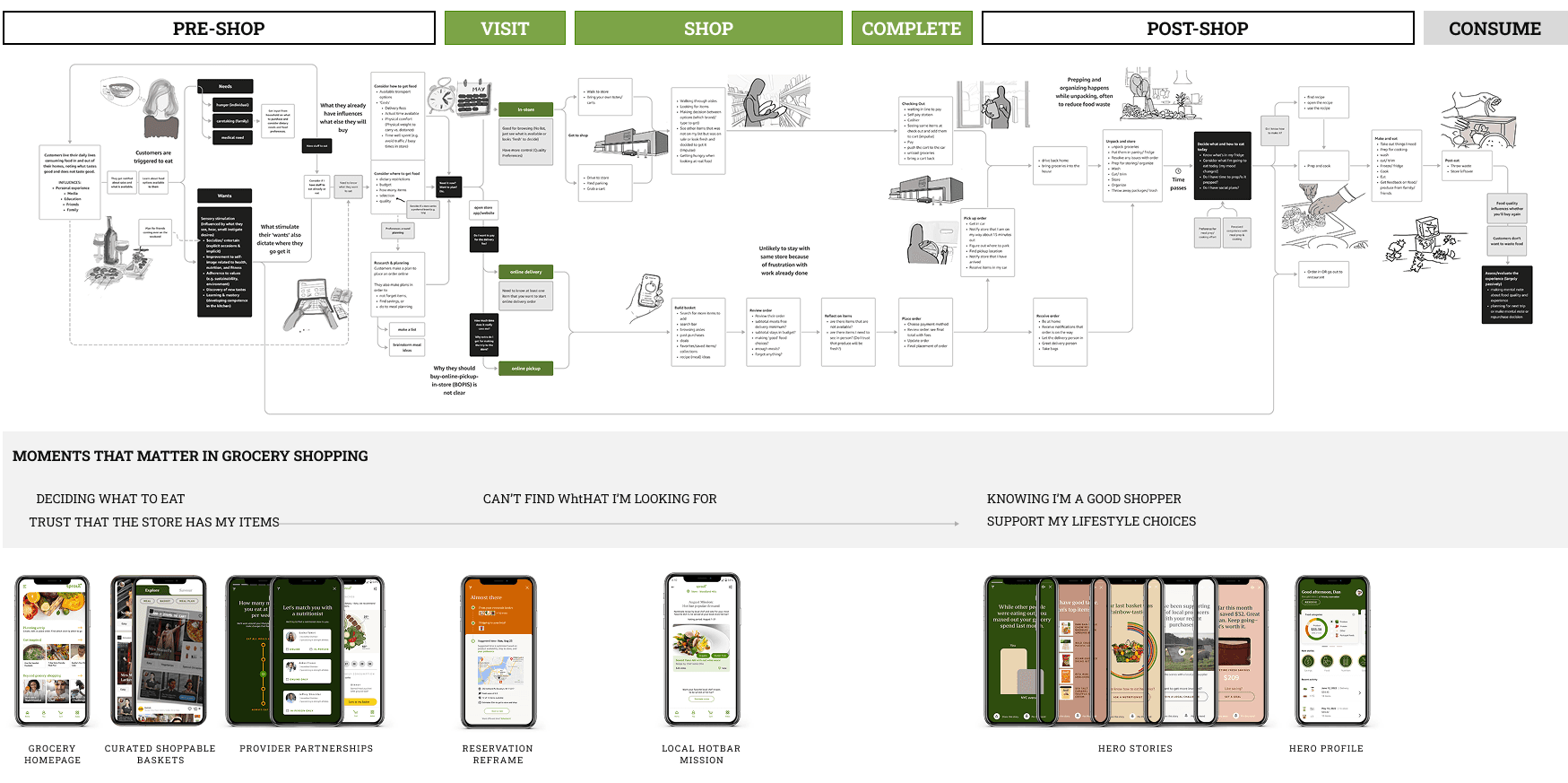
To solve for long-term retention, I architected the experience around the Behavioral Hook Model. We shifted focus from the "Complete" phase of the funnel to the "Pre-Shop" and "Visit" phases, creating a self-reinforcing loop:
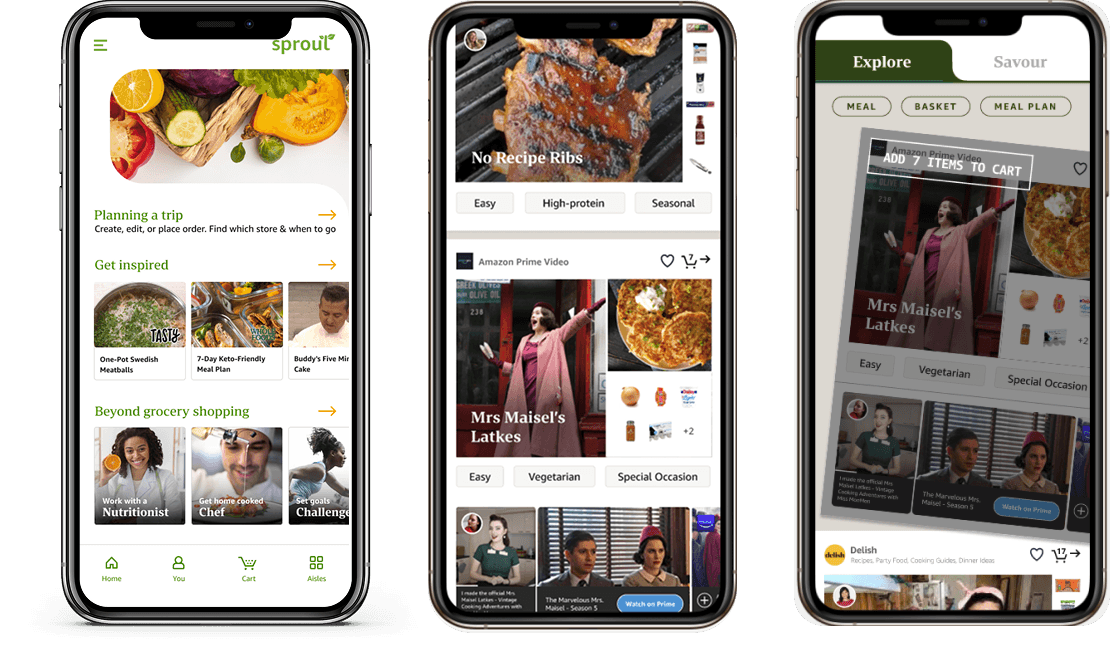
Moment 1: The Trigger (Social Discovery) Recognizing that food decisions are socially triggered. We designed a platform where recipes weren't just content, but shoppable social assets.
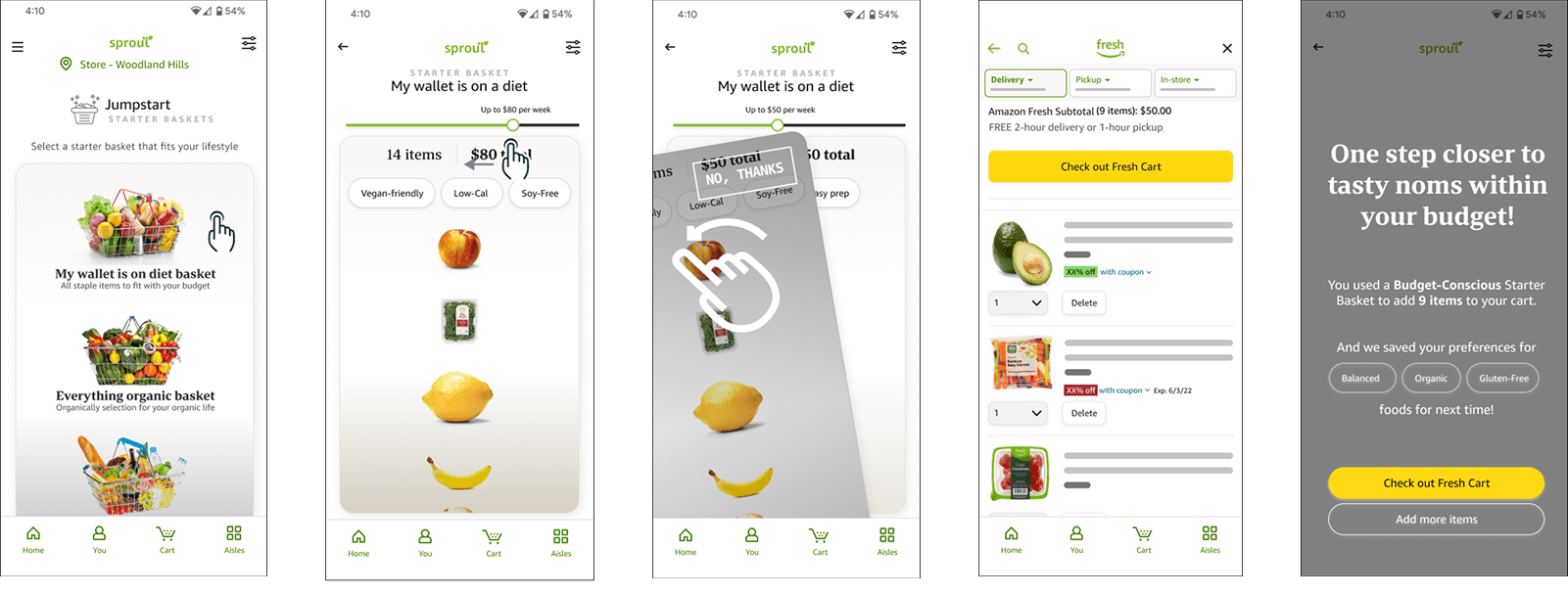
Moment 2: The Routine (Smart Support) Reducing the "pain" of the weekly shop. I led the design of the Starter Basket, a curated entry point based on deep purchase history analysis.
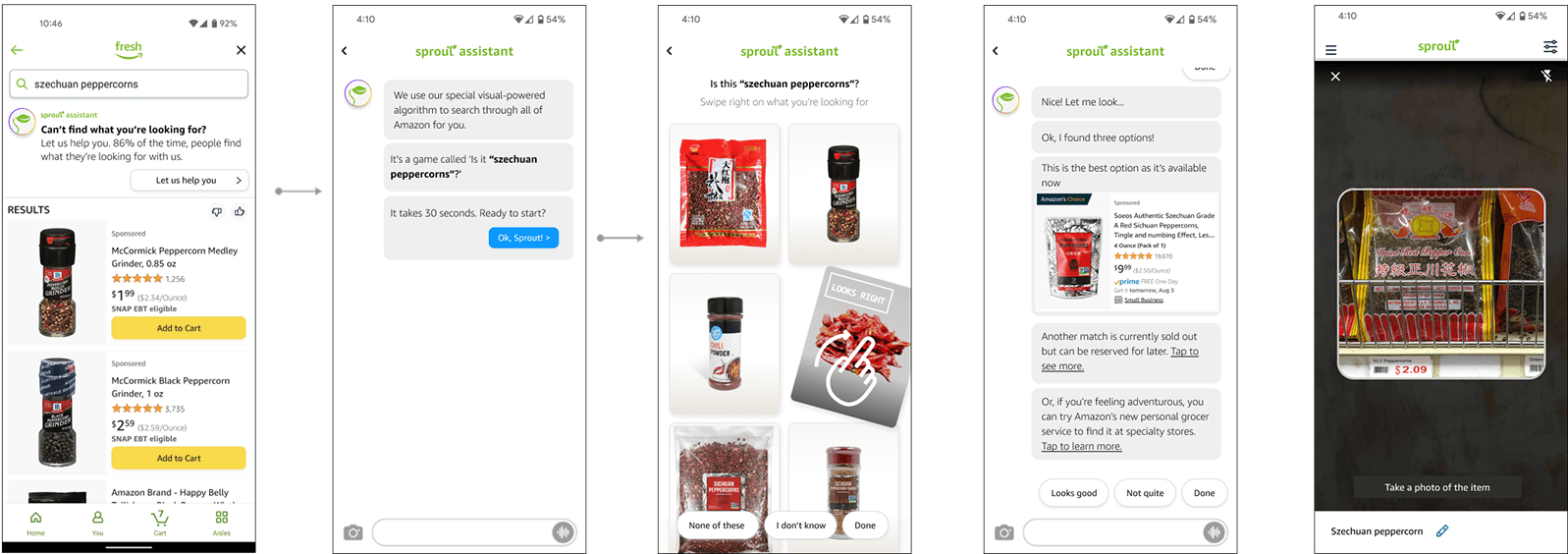
Moment 3: The Reward (Personalized Nourishment) Helping users feel recognized for their lifestyle choices. We conceptualized an AI assistant that could bridge the physical and digital worlds.
Social Discovery (The trigger)
We introduced "Shoppable Feeds" to turn passive scrolling into active inspiration. By integrating social proof and community-driven content, we reduced the time spent in the "What's for dinner?" paralysis, facilitating faster, confident decision-making.
Outcome: This concept evolved into what is now the Amazon Fresh/Sidechef interactive, shoppable recipe integration.
Smart Support (The Routine)
To minimize decision fatigue, we conceptualized a data-driven Starter Basket. Instead of building a cart item-by-item, users simply 'edit' a prepopulated list of their staples. This reimagined flow turned a complex task into a high-speed confirmation, reinforcing Amazon's role as a personal lifestyle partner that anticipates customer needs.
Outcome: This was adopted by the Shopping Cart team and launched as the "Your Essentials" feature.
Seamless Intelligence (The Reward)
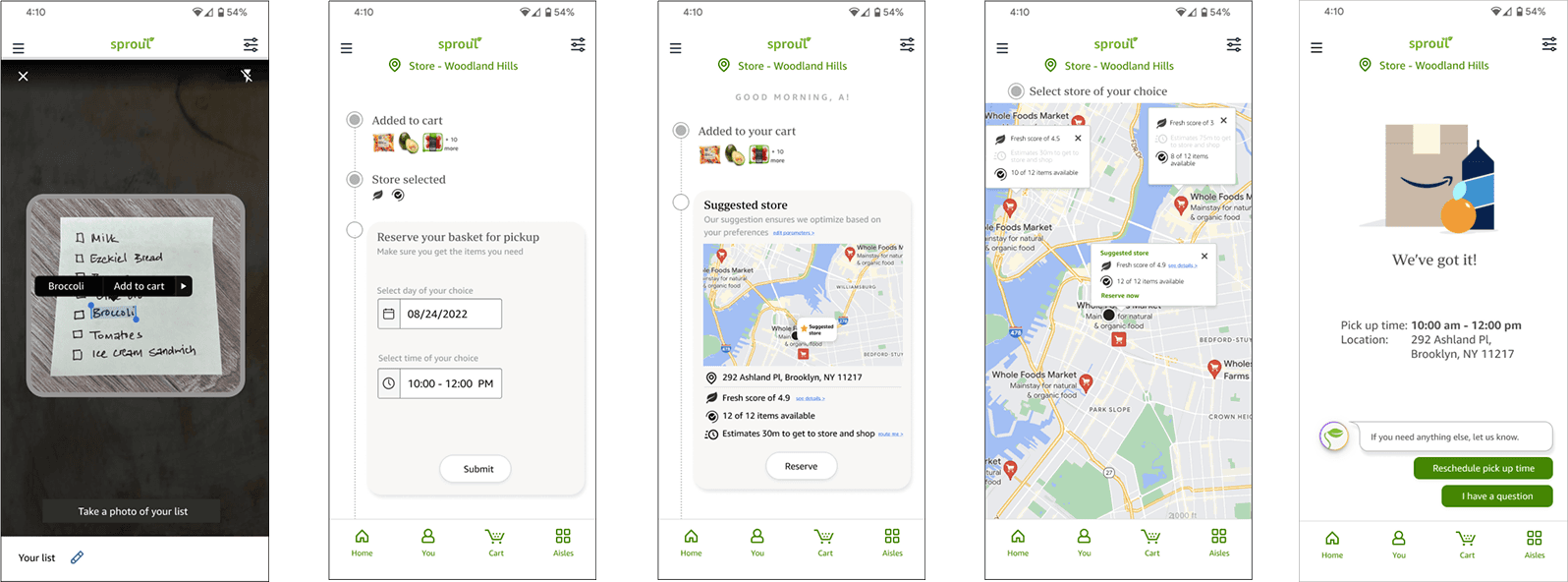
We conceptualized an AI-powered assistant that meets customers where they are—whether they are sketching notes on a napkin or browsing an app. By utilizing image-to-cart technology and visual-centric discovery, we turned the physical shopping list into a digital reality. This rewarded the customer's effort with a high-speed, intuitive experience that feels like a natural extension of their daily habits.
Outcome: Our concepts for OCR-driven cart building and visual-centric search were fully integrated into the Amazon ecosystem. These features transitioned from high-level prototypes to core functionalities, now serving millions of users by bridging the gap between physical intent and digital checkout.
The Impact
The Customer: From Transactional to Emotional We shifted the North Star from "Efficiency" to "Trust." By focusing on dietary aspirations and sensory browsing, we transformed a chore into a nourishment strategy.
The Business: Bridging the "Inspiration Gap By integrating shoppable social content and "Essentials" baskets, we addressed the $2.6B lapse in revenue, giving customers a reason to return beyond mere convenience.
The Technology: The AI-Powered Foundation The frameworks we built for handwritten-list conversion and shoppable recipes provided the strategic blueprint for Amazon's AI-driven grocery ecosystem.
The "Moment that matters" for any grocery experience is the meal on the table. By orchestrating a flow that accounts for social triggers and personal dietary needs, we proved that Amazon could be more than a logistics engine—it could be a meaningful part of a customer's daily life.